On demand
- 09 april 2026
Online
- Online
- Bill Taylor
- Engels
Krachttraining en bekkenbodemdisfunctie: Lekt u bij het heffen? | Nascholing Bekkenfysiotherapie
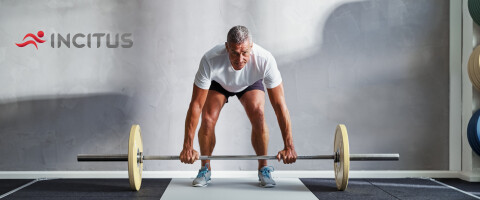
Waarom lekken patienten bij gewichtheffen - en hoe help jij hen?
Stress-urine-incontinentie en verzakkingsklachten zijn veelvoorkomend bij actieve patienten die sporten of gewichten heffen. In deze webinar legt Bill Taylor - bekkenfysiotherapeut uit Edinburgh en promovend aan Oxford Brookes University - uit hoe intra-abdominale druk en ground reaction forces de bekkenbodemspieren belasten, en waarom traditionele Kegel-oefeningen in isolatie tekort schieten voor patienten met een hoge fysieke belasting.
Kracht-en-conditioneringsprincipes toegepast op de bekkenbodem
Je bekkenbodemspieren zijn skeletspieren. Ze reageren op dezelfde trainingsprincipes als elk ander spier: specificiteit, overbelasting en progressie. Leer hoe je evidence-informed oefenprogrammas opstelt, klinisch dosigeert met het repetition maximum continuum en progressie bewaakt - inclusief het 'load them til they leak'-concept voor bepaling van de individuele 1RM.
Bewijs voor gecombineerde krachttraining en PFMT
De Cochrane Review (Dumoulin et al., 2018) toont niveau-1a-bewijs voor PFMT. Virtuoso et al. (2019) laten zien dat de combinatie van gewichtstraining met PFMT al na vier weken significant betere resultaten geeft. Prevett et al. (2023) tonen aan dat zwaar heffen tijdens de zwangerschap veilig kan zijn en geassocieerd is met minder incontinentie postpartum.
Squat, deadlift en lunge - bekkenbodem in functionele bewegingen
De bekkenbodem verlengt relatief tijdens de neergaande fase van de squat en contracheert tijdens de opwaartse fase (Wiebe et al., 2019). Crawford et al. tonen aan dat functionele bewegingen meer motorunitrecruitement in de bekkenbodem genereren dan geIsoleerde kegels. Praktische richtlijnen voor load-aanpassing, ademhaling en standbreedtevariantie worden besproken.
Mannelijke atleet en bekkenbodemdisfunctie
Bekkenbodemdisfunctie bij mannelijke atleten wordt vaak gemist of verwisseld met adductortendinopathie of osteitis pubis. Taylor bespreekt hoe je PFD herkent bij mannelijke sporters, welke symptomen een rol spelen en hoe S&C-principes worden geIntegreerd in de revalidatie van mannelijke patienten.
Leerdoelen
Na afloop van deze scholing kan de deelnemer
- de biomechanische belasting van de bekkenbodem (intra-abdominale druk, ground reaction forces en musculaire co-activatie) tijdens krachtoefeningen en high-impact activiteiten kritisch analyseren en integreren in het klinisch redeneerproces, waarbij evidence-based kennis uit de inspanningsfysiologie en trainingswetenschappen wordt afgewogen tegen individuele patientfactoren voor het nemen van complexe klinische beslissingen.
- de principes van kracht-en-conditionering (specificiteit, overbelasting en progressie) systematisch toepassen op de opzet en dosering van een geIndividualiseerd bekkenbodemtrainingsprogramma, waarbij kritisch geredeneerd wordt over de kloof tussen traditionele Kegel-protocollen en functionele krachttraining in het licht van actuele wetenschappelijke evidentie (Cochrane Review Dumoulin et al., 2018; Virtuoso et al., 2019).
- klinische doseringsconcepten uit de trainingsleer (repetition maximum continuum, 1RM-benadering, acute:chronische workloadratio) op een methodisch verantwoorde wijze vertalen naar de bekkenbodem- revalidatie, waarbij real-time echografie en oppervlakte-EMG worden ingezet als klinische meetinstrumenten voor prognostische en behandelgerelateerde besluitvorming in complexe casuistiek.
- risicofactoren voor bekkenbodemdisfunctie bij sporters en gewichtheffers (leeftijd, pariteit, BMI, trainingsfrequentie, Valsalva-techniek) systematisch screenen en strategisch integreren in een multidisciplinaire aanpak, waarbij zelfstandig wordt afgewogen wanneer verwijzing naar of samenwerking met bekkenfysiotherapeut, S&C-coach en/of psycholoog geIndiceerd is.
- de functionele anatomische relatie tussen de bekkenbodem, het heupcomplex, de diafragma en de core tijdens atletische en dagelijkse activiteiten kritisch reflecteren en op basis hiervan een gepersonaliseerd, progressief revalidatieprogramma opstellen gericht op terugkeer naar sport en functieherstel, bijdragend aan de verdere ontwikkeling van evidence-informed praktijk in de bekken- fysiotherapie en sportfysiotherapie.
Accreditatie
De scholing is geaccrediteerd voor het Kwaliteitshuis Fysiotherapie en Pro-Q-Kine.
Cursus planning
- 20:00 - 20:03: Welkom en introductie
- 20:03 - 21:00: Webinar
- 21:00 - 21:30: Q&A
- 21:30 - 22:00: Afsluitende toets